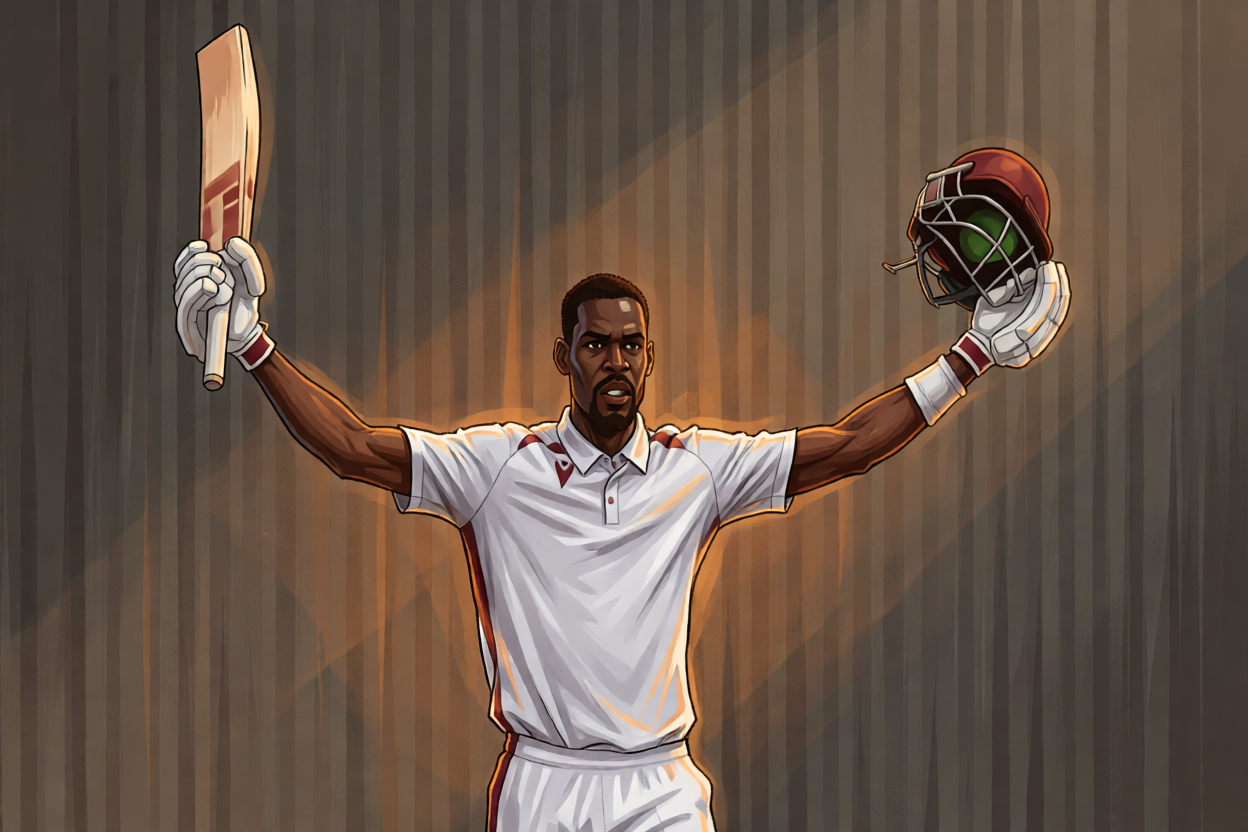



The Ranji Trophy does not have a broadcast for most of the season. This is a fact that is known to people who follow domestic cricket and that is a surprise to people who do not. The matches are streamed, on a platform that is free to watch and that has, at any given time during a Ranji season, somewhere between two hundred and two thousand viewers, depending on who is batting. When Jadeja is bowling, the number goes up to about fifteen thousand, which is a number that tells you something about the audience for domestic cricket in this country and that tells you nothing about Jadeja, who is bowling, regardless of whether the cameras are on.
What The Forty Overs A Day Actually Tells You
Jadeja is thirty-five. He has had a knee that has been managed for three seasons. He is the first-choice allrounder in all three formats for India, which is a workload that no other player in the country carries, and which is a workload that has, in the last two years, broken every other allrounder who has tried to carry it. He chose to play the full Ranji season because, according to him, because he said it in a press conference in Rajkot in December, he wanted to bowl long spells, and the only place to bowl long spells, now, is the Ranji Trophy.
He bowled forty overs a day, on average, across the eight matches. This is not a number that is normal for a spinner in the Ranji Trophy, where the spinners bowl in bursts and where the captains rotate them, because the pitches are flat and because the batters are set and because the spinners are tired. Jadeja bowled forty overs a day because he asked to bowl forty overs a day, and because the Saurashtra captain, who is Jaydev Unadkat and who has known Jadeja since they were seventeen, let him.
The Batters Who Were Not Afraid Of Him
The thing about the Ranji Trophy is that the batters are not afraid of you. The batters in international cricket are afraid of Jadeja, because Jadeja is the best bowler in the world in international cricket, and because the ball does things in international cricket that it does not do in the Ranji Trophy, and because the batters in international cricket have a lot to lose. The batters in the Ranji Trophy do not have a lot to lose. The batters in the Ranji Trophy are playing for their states, and for their places in their states, and for a contract that pays them less in a year than Jadeja makes in a week, and they are playing Jadeja, and they are not afraid of him, and they are playing him on the front foot.
Jadeja took thirty-one wickets in the season at an average of nineteen. The numbers are good. The numbers are not the point. The point is that he bowled to batters who played him on the front foot, and who hit him over the top, and who used their feet, and who made him bowl the ball that he does not bowl in international cricket, which is the ball that is flighted, the ball that asks the batter to come down the track. He bowled that ball. He got wickets with it. He went for runs with it. He learned, in the only way a thirty-five-year-old spinner can learn, by being hit and by not dying from it.
Why This Matters More Than The IPL
The IPL is on television. The Ranji Trophy is on a stream that fifteen thousand people watch. Jadeja’s Ranji season is the most important thing in Indian cricket right now because it is the thing that will decide whether he plays the next World Cup, and because it is the thing that has kept him, for eight matches, on the fields of Rajkot and Ahmedabad and Pune, bowling forty overs a day, to batters who were not afraid of him, and that is the thing that keeps a spinner alive, and that is the thing that the IPL, for all its money, does not do.