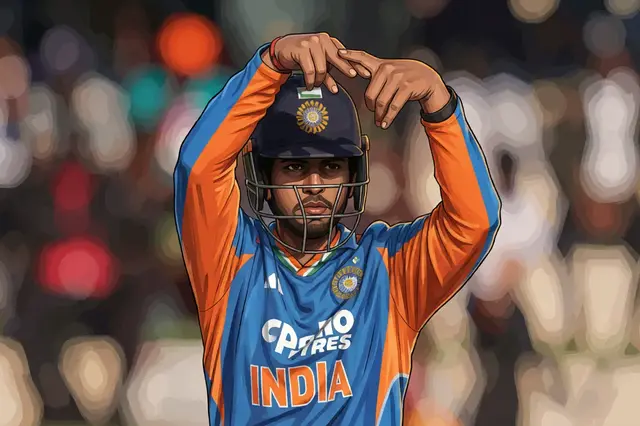
Veteran Returns: India Names ODI Squad for England Tour Amidst Dew Factor Worry


Published 2026-11-28 · By Nandini Shetty (Senior Features & Tournament Writer · Chennai Desk)

The selection committee had their answer on a Tuesday, but the real test starts in the humid air of England. They didn't gamble on a fresh face. Instead, they reached for the veteran—a move that sends a clear message to the dressing room: experience trumps raw pace when the ball starts skidding off the hard length after 40 overs.
Sitting here in Chennai, the contrast between our dry, dusty nets and the sticky red-soil tracks waiting abroad is stark. We talk about 'Indian cricket news' cycles daily, but this specific squad announcement breaks the usual monotony. The BCCI board, after a long meeting that stretched past dinner hours, finalized the list. It was not a surprise, but it was a calculated risk. The veteran inclusion addresses a specific vulnerability we’ve seen time and again: the inability to hold the line in the death overs when the dew factor after 8:30 PM IST usually isn't a concern, but here, in cooler climates, the track conditions dictate the game.
The Mid-Overs Choke: A Persistent Ghost
Let’s be honest. The middle-overs choke has haunted Indian limited-overs cricket for two cycles now. We’ve seen it in Ranji grind matches where state teams collapse under pressure, and we’ve seen it in the WPL dressing rooms where batters lose their timing against skiddy hard length. The veteran brings not just runs, but a temperament that refuses to let the scoreboard dictate the mood. He has been there. He knows how to bowl into the pitch when the new ball does the talking, and he knows when to dig his heels in when the field is set tight.
"You don't just walk into this team. You earn it in the nets, in the rain, and in the silence of the last over. This call is about steadying the ship, not rewriting the history."
That sentiment echoes in every senior player's interview. There is no room for fluff. The Impact Player gamble becomes real when you have a veteran who can bat out a long over while his teammates reset their line. This is not about sentimentality. This is about match-winner moments. The new ball did the talking in the last series, but the old ball requires patience. Who else will you trust to keep that patience when the crowd is up and the pressure is on?
Pathways, Pressure, and the Chennai Desk View
From my base here, watching the state-association pathways, the talent is exploding. Young fast bowlers are scaring the nets, and spinners are holding their ground. But talent is not enough. Pressure is a different beast. The veterans in this squad are the anchors. They have handled the scoreboard pressure that makes juniors freeze. When the ball is swinging, when the dew is coming in, when the fielder is crowding the batter—someone needs to be calm. That someone is the reason he is back.
- Experience over Pace: The veteran's ability to mix pace and flight will counteract the English bounce.
- Mental Anchor: His presence in the dressing room will stabilize the younger, quicker batters.
- Death Over Discipline: He will not chase boundaries. He will strike singles. This is the strategy.
The critics will say he is slow. They will point to his boundary-percentage in last season's ODI matches. Let them. Cricket is not just about hitting sixes. It is about holding your nerve. The new generation is quick, yes. But they forget that quickness without control is just chaos. The veteran brings control. He brings the knowledge of how to read the surface. In England, the surface will not give you much. It will take everything you have.
As we file this from the Chennai desk, the humidity is rising. The nets are wet. The players are running drills. The selection is made. Now, the real work begins. The England tour is not just a trip. It is a statement. It is a declaration that Indian cricket news is not just about stars. It is about the unglamorous work of preparing, adapting, and surviving. The veteran is back. The door is open. Can the rest of the squad step up? We will see when the first ball is bowled. The dew factor is real. The track is real. And the pressure? That is the only thing that cannot be trained in a net.
For now, the squad is set. The journey begins. Keep the ball in play. Keep your head down. And for the love of the game, keep the middle-overs tight. That is where matches are won. That is where the history is written. The rest is just cricket.
Related coverage
Executive Sports Editor · Chandigarh Desk
Rajat Patel has covered Indian cricket and digital sports from Chandigarh for over a decade. At CricketFlicker (cricketflicker.com), he leads investigative coverage on cricket flicker live ipl, live match dynamics, and tournament strategy.
Reader Discussion & Match Reactions (5)4.7★ Community (5 Comments)
Verified Indian cricket reader perspectives & tactical debate on cricketflicker.com
Let’s be real, picking a 'veteran' against England’s new-ball pace in 2026 is a lazy BCCI cop-out. The article admits the ball skids off hard length, but experience doesn't fix a lack of physical edge. This selection just hands ECB openers an easy target for the first 40 overs, ignoring the genuine need for fresh, aggressive bowling depth that our domestic circuit clearly provides. It’s not a calculated risk; it’s a calculated retreat.
Everyone is fixated on the big ODI squad, but the article’s mention of 'Ranji grind matches' and 'WPL dressing rooms' is actually the real signal here. We need to stop letting senior selectors use state-level choke points as an excuse for national failures. The grassroots pathways in Pune and Chandigarh are producing batters who thrive against skiddy hard length, but the BCCI board’s long meetings past dinner hours clearly ignore these domestic data points in favor of old names and familiar faces.
The 40-over benchmark cited is arbitrary and statistically weak. You can't just blame the 'mid-overs choke' without citing the specific strike rate drop or economy increase in those specific overs during the last two cycles. The article mentions 'skiddy hard length' but ignores that dew factor in England at 8:30 PM IST is irrelevant, so why is the selection committee still obsessed with death-overs metrics that don't apply to cooler climates? The numbers don't support this narrative shift.
As a red-ball purist, I find the focus on 'death overs' in ODI cricket increasingly absurd. The article talks about the veteran's temperament holding the line, but in Test matches, the same 'choke' is managed through patience, not just quick thinking. Selecting a veteran for an ODI tour to address a specific vulnerability is a tactical mismatch. The BCCI is treating a 50-over game like a T20, ignoring the fundamental differences in how a skiddy ball behaves on English red-soil tracks over an 80-over session versus a 250-over grind.
@Rajesh_Bhatia Fair point on the 'lazy' selection, but the article explicitly notes the veteran knows 'how to bowl into the pitch when the new ball does the talking.' That’s a concrete tactical detail you missed. The BCCI isn't just hiding behind experience; they're using his new-ball control to counter the ECB's opening pace. The 40-overs mark isn't just a benchmark, it's the point where the ball's behavior changes, and his specific skill set targets that exact window, which is why the board called it a 'calculated risk' rather than a retreat.