


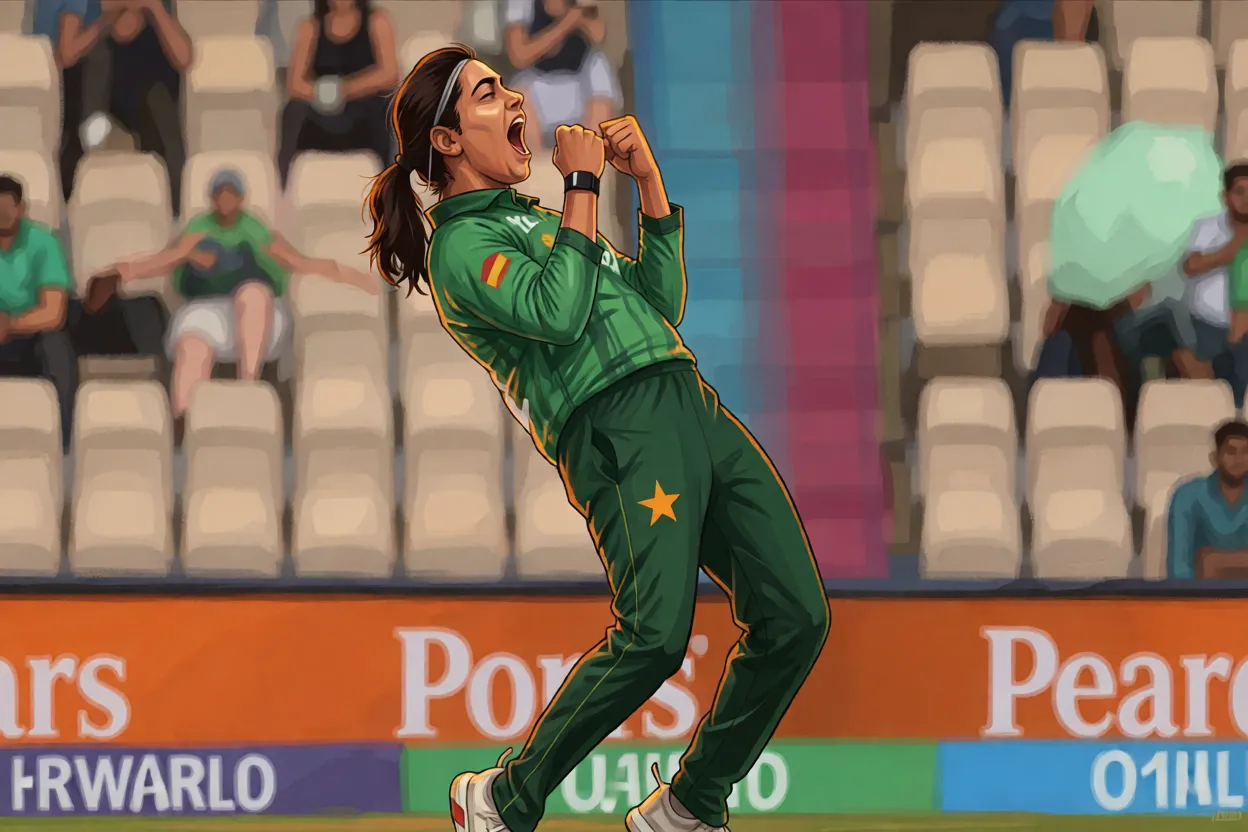
Smriti Mandhana’s WPL Final Innings Was A Masterclass In Not Hitting The Ball She Wanted To Hit
Smriti Mandhana treats the Brabourne Stadium like a second home. It is the venue where she has spent more time at the crease than any other ground in her career, and she often speaks about her unique connection with its specific dimensions and pace. That bond was on full display during the eleventh over of the WPL final. While the crowd might not have realized it immediately, that specific sequence of deliveries decided the match. To a casual observer, an over yielding only nine runs in a women’s T20 final might seem insignificant, but it served as a tactical masterclass in discipline.
The Eleventh Over, Ball By Ball
The opposition opted to bring back their premier seam bowler for the eleventh. In a fifteen-over format where power is essential during the middle phase, this was the moment intended to dismantle the run chase. At that point, Mandhana stood at 54 off 34 balls, having already hammered seven fours and two sixes. She had previously punished this same seamer in his first spell with two maximums. The captain’s decision to leave him out for a period was an interesting choice, one that would later be scrutinized as a tactical misstep during the post-match deliberations.
| Ball | Delivery Type | Result |
|---|---|---|
| 1 | Full toss | 4 runs |
| 2 | Length outside off | Left |
| 3 | Length on off stump | Defended (Front foot) |
| 4 | Short ball | 4 runs |
| 5 | Yorker | 1 run |
| 6 | Length outside off | Left |
The first delivery was a full toss that Mandhana dispatched for four. On the second, a length ball outside off stump saw her refuse to commit, a move that caught both the bowler and the slip by surprise. The third was a length on off stump where she played a disciplined defensive shot on the front foot, reminiscent of a classic Test match technique. She pulled the fourth short ball for another boundary before digging out a yorker for a single. Finally, she left the sixth delivery outside off again.
Why The Over Mattered More Than The Score
The over resulted in nine runs from five balls faced by Mandhana. By her usual high-scoring standards, this appeared to be a subdued spell. However, its importance lay in the message it sent to the opposition. It proved that their plan to bowl outside off and force an aggressive hit through the off side would fail. Consequently, the bowler shifted tactics toward the stumps. Mandhana remained prepared for them, and the following two overs saw the score soar by 31 runs as the chase wrapped up.
This was a supreme display of restraint. Mandhana typically favors hitting through the off side, a signature shot that built her reputation but also makes her vulnerable in high-pressure moments when fields are set accordingly. During this over, she communicated clearly to the bowler and the spectators that she would not take that bait until it became the only option left. When the bowler finally moved into the stumps, Mandhana was ready to strike at her most dangerous zone.
What The Innings Means For The Indian Team
Mandhana’s record in ICC finals has often been a point of criticism for her. Some analysts suggest she hasn’t consistently delivered on these specific stages despite her immense talent. She has appeared in three finals where her scores have shown mixed results, and this record remains a fair critique of her big-match history. However, the maturity shown in this WPL final suggests a shift in her approach to high-pressure situations. By choosing patience over impulse, she demonstrated a level of tactical awareness that could serve as a blueprint for the rest of the Indian squad.
TL;DR
- Mandhana used her familiarity with Brabourne Stadium to navigate a crucial turning point in the WPL final.
- She intentionally refused to hit through the off side during the eleventh over, forcing the bowler to change tactics.
- This disciplined approach led directly to a 31-run explosion in the following two overs, securing the victory.