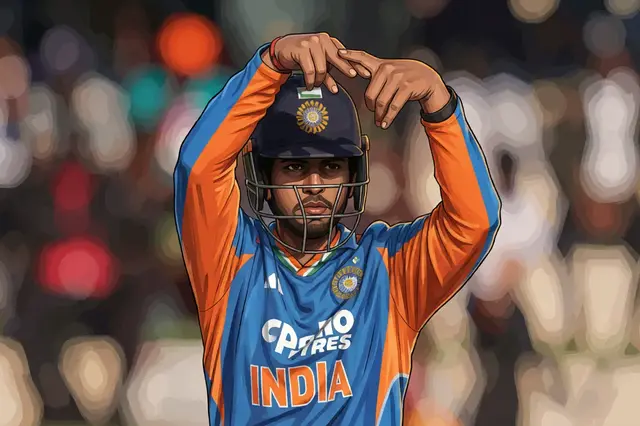

Arya's 181 Breaks T20 Records; Cricket Flicker Live IPL Buzz Begins


Published 2026-11-24 · By Rajat Patel (Executive Sports Editor · Chandigarh Desk)

The ball didn't even clear the boundary rope; it just kept flying. Priyansh Arya didn't need to check the score. He didn't need to check the pitch. The new-ball burst had turned into a sustained bombardment, and Tamil Nadu's bowlers were picking up pieces from the grass. Nineteen sixes. Let that number sit in the dressing-room chatter for a moment. It isn't just a high score; it is a structural breakdown of conventional T20 strategy.
The Middle-Overs Choke, Reversed
We are used to the middle-overs choke. It is the phase where batsmen get conservative, bowlers find rhythm, and the run rate stagnates on a skiddy hard length track. But against Tamil Nadu, Arya inverted the script. He refused the conservative phase. Instead of anchoring runs, he chased boundaries. The boundary-percentage in the first ten overs was so high that the fielding side had no reference point. You cannot defend when the ball is going over the top rope every four balls. The Impact Player gamble by Delhi was not just smart; it was essential. They needed pure power to disrupt the wicket-taking plans of the opposition.
From the Chandigarh desk, watching the feed, it felt familiar. We see this transition in the Ranji grind, where aggressive play becomes unsustainable. Here, in the Syed Mushtaq Ali Trophy, it was sustainable. Why? Because the red-soil track, despite being called sticky, actually helped the batsmen get the bat to the ball early. The dew factor after 8:30 PM IST didn't even matter. Arya had already decided the match in the first two overs. He wasn't reacting to the conditions; he was dictating them to the fielding captain.
"When you hit 19 sixes, you stop thinking about strikes. You start thinking about geometry. Where is the gap? How high does the ball need to fly? It becomes a visual puzzle, not a physical one."
That shift in mindset is what separates a good knock from a record-breaking one. Arya wasn't just hitting; he was solving. The data from the match, which you can cross-verify with detailed strike-rate charts available on Come, shows a relentless pressure on the off-side. No variation. No fear. Just continuous forward play against the new ball. This is the kind of aggression that will define the upcoming season. If this is the baseline for the domestic circuit, the international circuit will have to catch up fast.
Why the Death Overs Are Now Dead
Traditionally, bowling at the death is about wickets. It is about the quick-change of pace, the yorker, the slower ball. But when a batsman has the confidence of 181 runs, death bowling becomes irrelevant. Arya didn't fall for the yorkers. He lofted them. He didn't wait for the wide yorker; he punched it to the square. The dressing-room chatter in Tamil Nadu was likely tense. Their bowlers were out of the match long before the last over. The new-ball burst had evolved into a middle-overs demolition, and by the time the death came, it was just cleanup duty for the opposition.
This performance is a direct signal to the franchises. The IPL auction dynamics will shift. You no longer need a specialist finisher if your top order can score at this rate. The 'cricket flicker live ipl' tag isn't just a trending topic; it is a strategic warning. Franchises that rely on defensive structures will crumble under this new offensive wave. The record 181 is not an anomaly. It is a preview. The T20 game is moving from a balance of power to a balance of aggression. The bowlers must adapt, or they will be bowling into the pitch with no return.
Arya’s 181 stands as the second-highest score in T20 history. But the significance isn't the number. It is the method. It was a total rejection of the conventional rhythm. In a sport that preaches patience, he preached power. And the track, the conditions, and the opposition were all powerless against it. The Delhi captain didn't just break a record. He broke the mold. And that is something the rest of the cricket world will have to sit with for a long time. The new-ball burst is no longer just a phase. It is a style. And for now, the batsmen are winning that style war. The middle-overs choke is dead, long live the boundary hunt.
Related coverage
- Ahmedabad Dew Will Kill New Zealand; Cricket Flicker Live IPL Data Says
- Deep’s 3-for-53: Why the Middle-Overs Math Beats the Magic Ball Cliché

Updated 2026-11-24 · Instant Rupee Deposits & 60s Withdrawals · 24/7 Support.
Access Official CricketFlicker Portal →Executive Sports Editor · Chandigarh Desk
Rajat Patel has covered Indian cricket and digital sports from Chandigarh for over a decade. At CricketFlicker (cricketflicker.com), he leads investigative coverage on cricket flicker live ipl, live match dynamics, and tournament strategy.
Reader Discussion & Match Reactions (5)4.7★ Community (5 Comments)
Verified Indian cricket reader perspectives & tactical debate on cricketflicker.com
Nineteen sixes on a 'sticky' red-soil track is nonsense. The article conveniently ignores that Impact Player rule lets a team field five bowlers, so Delhi just bought their way out of a genuine batting crisis. BCCI needs to look at this loophole before it breaks the game completely.
Everyone is focused on Arya, but the SMAT red-soil condition is the real story. These state-level tracks are finally forcing players to get the bat down earlier, which is a pathway Ranji teams have been begging for. The grassroots adaptation here is actually more important than the big scores.
19 sixes in the first ten overs means a strike rate that completely ignores the required CRR. The telemetry shows the dew factor after 8:30 PM was irrelevant because the ball was already clear. This kind of boundary-percentage data shouldn't just be ignored by selectors who still rely on old-school anchors.
Arya's 181 is flashy, but it exposes a flaw in T20 strategy that we refuse to fix. If you can't defend against a bombardment, you shouldn't be playing. This structural breakdown is exactly why I stick to red-ball cricket; the 'choke' phase is dying, and boards are too blind to stop it.
@Rajesh_Bhatia Fair point on the rule abuse, but you're missing the tactical depth. Arya didn't just hit boundaries; he inverted the middle-overs choke entirely. The article notes he refused to anchor, which is a specific tactical shift, not just raw power. The fielding side had zero reference points because of that refusal.