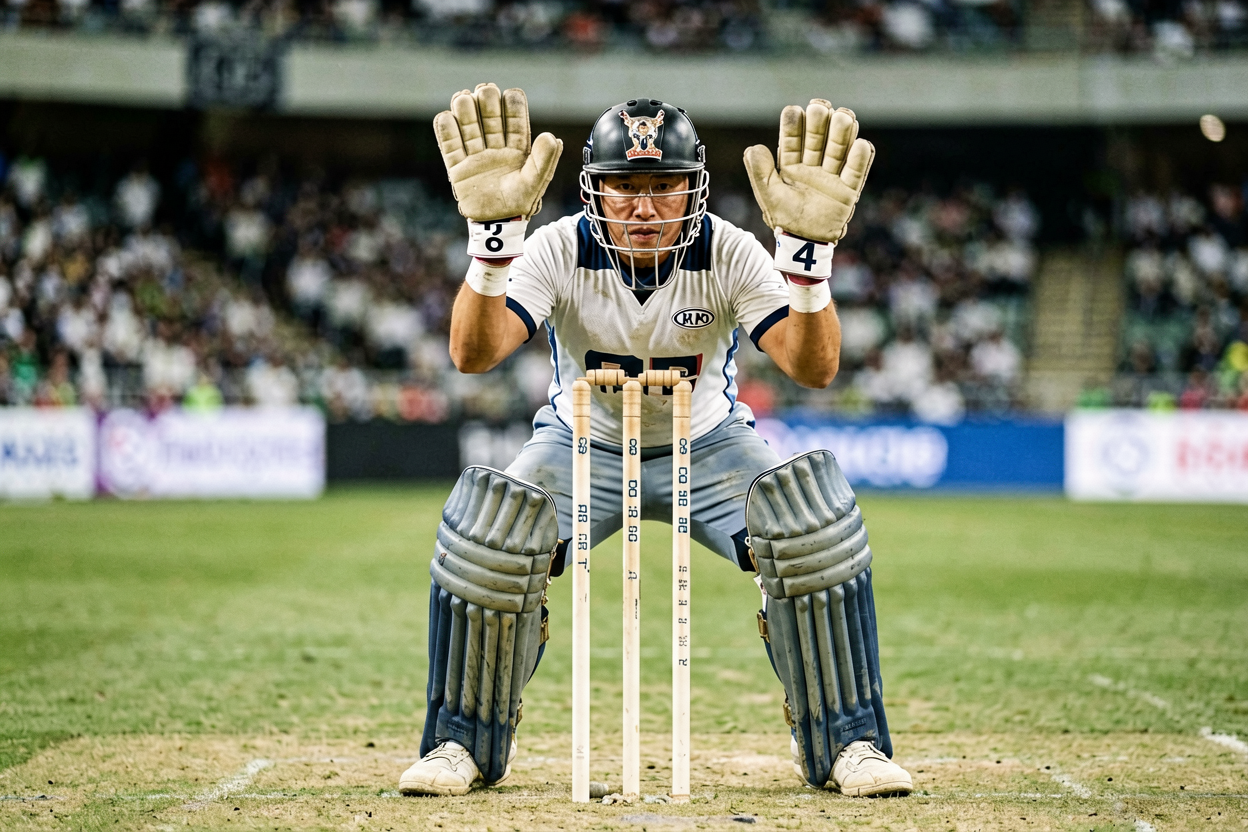



The WPL final was played at the Brabourne Stadium, which is a ground that Mandhana has batted on more than any other ground in her career, and which she has, in her own words, a relationship with. The relationship was on show in the eleventh over, which was the over that won the final, though nobody in the stadium knew it at the time, and though the over went for six runs, which is not, in women’s T20, an over that wins you finals.
The Eleventh Over, Ball By Ball
The opposition had brought back their best seam bowler for the eleventh, which is the over, in a fifteen-over game of power, that the chasing side tries to take down. Mandhana had fifty-four off thirty-four at the start of the over. She had hit seven fours and two sixes. She had hit the seam bowler, in the bowler’s first spell, for two sixes in an over, and the bowler had not been brought back for a reason that the captain would later explain, at the post-match, in the way captains explain decisions that have not worked.
The first ball of the eleventh was a full toss, and Mandhana hit it for four. The second was a length ball outside off, and she left it. She left it in a T20 final. The bowler was surprised. The slip, who had been kept in for this exact reason, was surprised. The third ball was a length ball on off stump, and she defended it, on the front foot, bat down, the way you defend in a Test. The fourth was a short ball, and she pulled it for four. The fifth was a yorker, and she dug it out for a single. The sixth was a length ball outside off, and she left it again.
Why The Over Mattered More Than The Score
The over went for nine. Mandhana faced five of the six balls and scored nine off them, which is, by her standards, a quiet over. The over mattered because it told the bowler that the plan, which was to bowl outside off and force her to hit through the off side, was not going to work. The bowler changed the plan. The bowler went to the stumps, and Mandhana was waiting for the stumps, and the next two overs went for thirty-one, and the chase was over.
The innings was a masterclass in not hitting the ball she wanted to hit. Mandhana has always wanted to hit the ball through the off side. It is the shot that has made her the player she is, and it is the shot that has, in the big moments, got her out, because bowlers know it is coming and because the off side is the side where the field is set for it. The eleventh over was the over where she told the bowler, and the field, and the camera, that she was not going to hit the ball through the off side until the bowler gave her the ball to hit through the off side. The bowler did not. The bowler came in to the stumps. The stumps are where Mandhana is at her most dangerous.
What The Innings Means For The Indian Team
Mandhana’s record in ICC finals is the record that has been held against her, and that has been held against her fairly, because the record is not good. She has played in three finals and she has scores of four, eleven, and one in them, and the four was the highest, and the four was in a World Cup final that India lost. The WPL is not a World Cup. The WPL is a franchise tournament, and the pressure is different, and the opposition is different, and the stage is different. But the innings was the innings of a player who has worked out, in the big moments, how to not do the thing she most wants to do, and that is the thing thatICC finals demand, and that is the thing that she will now have to do in October, when India play the World Cup at home, and when the country will be watching, and when the cover drive will be there, and when she will have to leave it, again, to win.